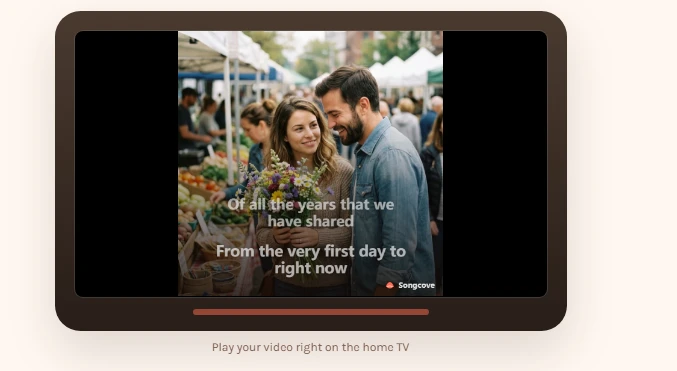
Yes. A personalized AI song can make many celebrations easier to remember because it combines personal memories with music that people can replay for years. According to consumer surveys published between 2023 and 2025, more than 70% of shoppers say personalized gifts feel more meaningful than standard products, while digital gifting continues to grow every year. Instead of giving an item that may only be used once, an AI-generated song includes names, memories, milestones, and personal messages in a format that remains accessible on phones, computers, and streaming devices. That combination of personalization and convenience fits birthdays, weddings, anniversaries, graduations, and family celebrations.
People often remember a celebration through photos, videos, and music rather than through the objects they received. Research on autobiographical memory has shown that music activates brain regions linked with emotion and long-term recall, while studies involving hundreds of participants have found that familiar songs improve memory retrieval significantly more than spoken words alone. A personalized song adds a new memory instead of borrowing an existing one, giving families something connected only to their own event.
That connection becomes stronger when the music includes personal details instead of generic lyrics.
A birthday song that mentions a favorite vacation, a childhood nickname, or the year two people first met usually creates a different emotional response than a song heard on the radio.
AI music platforms make this possible by turning simple information into complete songs. Users typically provide names, dates, memories, preferred music styles, and the mood they want. Natural language models organize the lyrics, while music generation systems arrange melody, harmony, rhythm, and vocals. Since 2024, improvements in generative AI have reduced production time from several weeks to only a few minutes or hours for many consumer services.
The result is not limited to birthdays. Weddings, engagements, retirement parties, baby showers, graduations, Mother's Day, Father's Day, holiday gatherings, and anniversaries all provide enough personal material for custom lyrics. A song celebrating a tenth wedding anniversary can describe how two people met, their first apartment, family traditions, and future plans within three or four minutes of music.
Different occasions usually emphasize different memories.
| Celebration | Personal Details Often Included |
|---|---|
| Birthday | Childhood stories, hobbies, achievements |
| Wedding | Proposal, first date, family journey |
| Anniversary | Years together, travel memories, milestones |
| Graduation | School experiences, future goals |
| Retirement | Career highlights, friendships, new plans |
Unlike many physical gifts, digital songs continue to be useful after the celebration ends. Flowers usually last less than 10 days, greeting cards are often stored away, and gift baskets are consumed quickly. A personalized song remains available whenever someone wants to hear it again. Cloud storage, smartphones, and streaming services allow people to replay the same recording years later without quality loss.
That long lifespan also makes personalized music suitable for long-distance families.
More than 5 billion people worldwide use social media, and millions celebrate birthdays or anniversaries while living in different cities or countries. Sending a custom song requires no international shipping, customs paperwork, or delivery delays. It can be shared through messaging apps, email, QR codes, or private links within seconds, making it practical for families separated by work, education, or military service.
Distance changes how people celebrate, but it does not reduce the importance of hearing something created especially for them.
Personalization has also become an important part of online shopping. Surveys from recent years show that roughly 70% to 80% of consumers are more likely to purchase products that can be customized. People often choose engraved jewelry, photo books, personalized artwork, and custom clothing because those products include individual stories. AI-generated music follows the same pattern while adding voice, melody, rhythm, and lyrics to the experience.
Because of that, some shoppers now consider a song before buying another traditional present.
For someone searching for a unique gift ideas for boyfriend, a personalized song can include shared travel memories, favorite activities, meaningful conversations, or future plans instead of relying on standard romantic phrases. Rather than giving another wallet, watch, or bottle of fragrance, the recipient receives something that cannot be purchased by someone else in exactly the same form.
Creating an AI song also requires less technical knowledge than traditional music production. Recording studios often involve composers, lyric writers, musicians, vocalists, engineers, and editing software. Professional custom music projects may require several weeks of scheduling and revision. AI-assisted systems simplify much of that process by allowing users to answer a series of questions before generating a complete draft that can still be refined.
This shorter production process has expanded access to personalized music.
According to market forecasts published between 2024 and 2030, the global generative AI industry is expected to grow at annual rates exceeding 30% in several sectors, including creative content. As these technologies improve, users gain more options for musical genres, vocal styles, languages, instrumental arrangements, and emotional tone without needing formal music training.
Technology prepares the music, while personal memories still shape what listeners remember after the celebration ends.
Many families also combine custom songs with photo slideshows, home videos, wedding entrances, graduation ceremonies, or anniversary dinners. Instead of replacing those traditions, personalized music becomes another part of the event. A three-minute song often accompanies dozens of photographs covering several years, allowing multiple generations to experience the same story together.
This combination explains why personalized AI music continues attracting interest across different age groups. Children enjoy hearing their names in songs, teenagers appreciate music matching current styles, parents value family stories, and grandparents often enjoy recordings that mention several generations together. Although the technology continues to improve every year, the reason people replay these songs usually remains the same: they hear familiar voices, familiar memories, and moments that belong only to their own celebration.