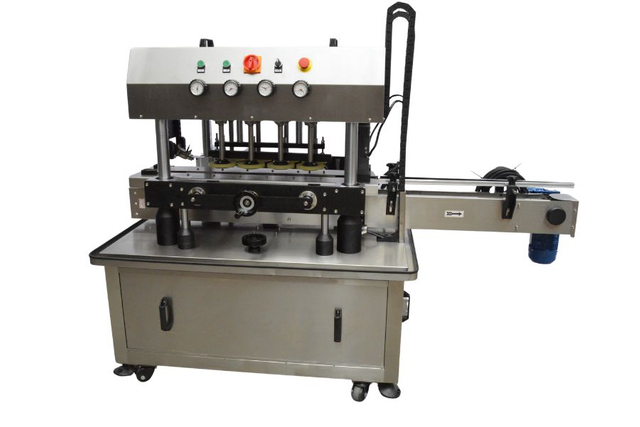
Automatic packaging machines reduce waste by controlling film length, fill quantity, seal position, package dimensions, and rejected units with repeatable machine settings. On a line producing 120 packs per minute for two 8-hour shifts, output can reach 115,200 packs per day; saving only 1 gram of packaging per pack removes about 115 kg of daily material use. Servo feeding can limit excess film, registration sensors correct printed-film position, and checkweighers remove off-spec packs before secondary packaging is added. A 2% reject rate at 100,000 packs creates 2,000 rejected packs, so lowering it to 0.5% prevents 1,500 packages from entering the waste stream. Waste falls mainly when less material is used per acceptable pack and fewer packs have to be made twice.
Packaging waste usually begins with very small dimensional allowances. A flow wrapper using 225 mm of film for a pack that can run reliably at 220 mm consumes an unnecessary 5 mm each cycle. At 150 packs per minute and 16 operating hours, daily output reaches 144,000 packs, making the excess equal to 720 meters of film before film width and thickness are considered.
That difference becomes easier to control when film movement is handled by servo motors and encoders rather than repeated manual adjustment. If a 500 mm-wide film has a density of 920 kg/m³ and a thickness of 40 μm, 720 meters represents roughly 13.2 kg of film. Across 250 production days, the same 5 mm reduction is about 3.3 tonnes of material.
Package dimensions cannot simply be reduced until the pack is difficult to seal. Seal width, product clearance, registration tolerance, barrier performance, and transport conditions still set the usable minimum.
Once film length is close to that minimum, registration accuracy becomes the next source of avoidable scrap. Printed films contain eye marks that photoelectric sensors read so the controller can place graphics, seals, and cuts at repeatable positions. A registration error of only several millimeters can put a cut through printed information or move a seal into an unsuitable area.
A line making 80,000 printed packs per shift with a 1.5% registration-related reject rate loses 1,200 packs. Reducing that rate to 0.4% lowers the count to 320, leaving 880 fewer rejected packages per shift. During 2025-style high-mix production, where multiple printed SKUs may run on the same machine, stored registration settings also reduce adjustment work after a format change.
Registration control, however, cannot compensate for unstable film tension. Roll diameter continually decreases during operation, while starts, stops, and speed changes alter the force applied to the web. Dancer rollers, load cells, brakes, servo systems, and closed-loop controls can keep film movement within the machine's specified operating range rather than depending on one fixed mechanical setting.
| Source of loss | Example production condition | Material consequence |
|---|---|---|
| 5 mm excess film | 144,000 packs/day | 720 m extra film/day |
| 1.5% print rejects | 80,000 packs/shift | 1,200 rejected packs |
| 2% total rejects | 100,000 packs/day | 2,000 rejected packs |
| 1 g excess material | 115,200 packs/day | 115.2 kg/day |
Stable web handling also supports thinner packaging structures. Moving from a 50 μm film to a 45 μm film is a 10% thickness reduction, provided barrier performance, puncture resistance, machinability, and seal strength remain acceptable. At an unchanged package area and polymer density, material mass per package also falls by approximately 10%, although qualification tests are needed before commercial production.
Thinner film places more importance on sealing control because a material that uses less resin may have a narrower operating window. Packaging machines regulate jaw temperature, contact time, pressure, and package speed so seals can be repeated without continuously changing settings. Poor control can create weak seals, wrinkles, burned film, or leakage, all of which consume another wrapper when the product is repacked.
If 60,000 packs are produced in a shift and 1% fail seal inspection, 600 wrappers are immediately affected. At a 0.25% failure rate, the number falls to 150, a difference of 450 packs per shift before counting lost product, labels, cartons, or rework material.
Seal performance also depends on what happens before the jaws close. Product crumbs, liquid, powder, or an incorrectly positioned item can enter the sealing area. Product-present sensors, timing controls, filling controls, and package-position sensors reduce cycles in which packaging material is consumed even though the product is missing or misplaced.
For liquid products, the relationship between filling and packaging is especially close. Modern filling and capping equipment can coordinate container presence, fill timing, cap placement, and downstream transfer so a missing bottle does not receive a fill command and an improperly positioned container does not continue normally through the line. At 100 bottles per minute, only 10 minutes of uncontrolled production represents 1,000 container cycles.
Fill accuracy matters because overfilling consumes product while underfilling can create rejected packages. Suppose a nominal 500 mL product is unintentionally filled at an average of 503 mL. At 50,000 containers, the extra 3 mL becomes 150 liters. Reducing the average excess to 1 mL cuts that figure to 50 liters, a 66.7% reduction in product giveaway under the same production volume.
Once primary packaging is controlled, rejected units must be detected before more material is added. A package rejected before labeling may lose one container; the same package detected after labeling, cartoning, and case packing may also consume a label, carton space, adhesive, and handling time. Checkweighers, barcode readers, vision systems, metal detectors, and seal inspection equipment can place rejection closer to the point where the fault originates.
For example, consider 100,000 units with a 0.8% primary-pack defect rate. There are 800 affected units. If each is automatically detected before a 6-gram carton is applied, as much as 4.8 kg of carton material avoids being attached to already unacceptable units. Across 250 comparable production days, the theoretical secondary-material difference reaches 1,200 kg.
Inspection becomes more useful when reject counts are linked to machine conditions. If a line normally rejects 0.3% of packs and the rate rises to 1.2% after a film-roll change, operators can compare registration, tension, seal temperature, and roll specifications instead of waiting until the end of the shift. On a 200,000-pack run, the difference between 0.3% and 1.2% is 1,800 additional rejects.
Changeovers create another measurable source of waste because new package sizes often require film position, guides, temperature, timing, fill volume, and sensor settings to be adjusted. Recipe storage allows previously validated parameters to be recalled for a SKU. If manual setup consumes 40 trial packs while a stored recipe reduces the average to 12, each changeover avoids 28 trial packs, or 70%.
A plant making 8 changeovers per day would avoid 224 trial packs under that example. Over 250 operating days, the difference becomes 56,000 packages. The financial effect depends on the package: losing 56,000 simple polyethylene wrappers is different from losing the same number of printed multilayer pouches, preformed trays, caps, and labels.
Roll changes produce a related loss. Operators cannot normally use every millimeter of a roll because enough material must remain for handling, splicing, threading, or machine requirements. Automatic splice systems and well-controlled unwinding can reduce the amount discarded during roll replacement. A reduction from 12 meters to 5 meters per roll removes 58.3% of that particular roll-change loss.
If a high-volume line uses 20 rolls per week, the 7-meter difference equals 140 meters weekly and about 7,280 meters over 52 weeks. Material purchasing records should therefore be compared with finished-pack counts rather than relying only on the scrap bin, because excess film inside acceptable packages does not appear as visible scrap.
Maintenance data adds another layer. A worn blade can create incomplete cuts; a damaged sealing jaw can produce inconsistent seals; a dirty registration sensor can misread eye marks; and a misaligned roller can move film laterally. A machine producing 120 packs per minute can make 7,200 packs in one hour, so even a 3% defect condition left for an hour creates 216 affected units.
Maintenance intervals are more useful when they are linked to machine cycles and reject history rather than calendar dates alone. A sealing assembly that has completed 5 million cycles may need different attention from the same assembly on a low-volume line after the same 12-month period.
Production records can then separate waste into material per accepted package, start-up scrap, changeover scrap, roll-end loss, rejected packages, and material damaged during stops. Without that separation, a reported 4% waste rate says little about where engineering work should begin. Two lines can both report 4% while one loses material through oversized packs and the other through seal rejects.
A useful baseline can be built from at least several representative runs rather than one unusually good shift. For example, recording 20 production runs across different operators, roll lots, speeds, and SKUs provides a better view of normal performance. If average film use is 6.4 grams per accepted pack and engineering changes reduce it to 6.0 grams, material use per accepted unit falls by 6.25%.
At 10 million packages per year, that 0.4-gram difference equals 4,000 kg of packaging material. If reject reduction separately saves another 1,500 kg, both figures should remain separate in reporting: one comes from using less material on every acceptable package, while the other comes from producing fewer unacceptable packages.
Material selection should still be tested against real distribution requirements. A 12% film-weight reduction that increases damaged products from 0.2% to 1.0% may move waste from packaging material into product loss, replacement packaging, and transport. Trials should therefore measure seal integrity, drop performance, puncture resistance, shelf life, barrier properties, and actual machine reject rates at normal production speed.
The most useful machine specification is consequently not maximum speed alone. A system rated at 180 packs per minute but producing 2% rejects creates 3.6 rejected packs each minute at full rate, while a line at the same speed and 0.5% rejects creates 0.9. Over a 16-hour day, the difference is 2,592 rejected packages.
Material efficiency is best measured as packaging material consumed per accepted saleable unit, supported by reject rate, changeover scrap, roll-end loss, and first-pass acceptance. When those figures are recorded by SKU and production run, millimeters of excess film, grams of overfill, failed seals, and unnecessary secondary packaging become measurable quantities rather than estimates.